
Best Prop Firms for NAS100 and US30 Index Trading With Clear Drawdown Rules in 2026
A fast move on NAS100 or US30 can create a profitable trade or breach a prop firm challenge before a trader has time to react. The difference often comes down to position size, index-specific leverage, execution costs, and how the firm calculates daily and maximum drawdown.
For traders comparing the best prop firms for NAS100 and US30 index trading in 2026, the important question is not simply which company offers the largest account. It is which rule structure fits the strategy: opening-range scalping, intraday trend trading, or holding positions for several sessions.
The5ers, FTMO, FundedNext, FundingPips, and Funded Trader Markets (FTM) publish different rules and offer different trading environments. FTMO also launched a separate futures product in September 2026, making it important to distinguish futures contracts from index CFDs. Rules and platform specifications can change, so the official account agreement and trading platform should always take priority over a comparison article.

What Traders Should Look for in a Prop Firm for Index Trading
The most suitable prop firm for index trading is one whose loss limits, trading hours, execution costs, and news rules match the way you trade. A generous profit split matters less if the account’s restrictions conflict with your strategy.
Which Rules Matter Most When Trading NAS100 and US30?
Check these points before purchasing an evaluation:
- ●Daily loss calculation: Is the limit based on starting balance, previous-day balance, equity, or a combination?
- ●Maximum drawdown: Is the limit static, trailing, or recalculated at specific times?
- ●Index leverage: Do not assume the forex leverage applies to indices.
- ●News restrictions: Can you open, close, or hold positions around US inflation data, employment reports, and Federal Reserve announcements?
- ●Overnight and weekend holding: Check the exact account type and whether an add-on is required.
- ●Trading costs: Include spread, commission, swaps, slippage, and any currency-conversion adjustments.
- ●Consistency and payout conditions: A profitable account may still need to meet separate requirements before a withdrawal.
The distinction between balance and equity is especially important. Equity includes the unrealized profit or loss on open positions, and the firm may include commissions and swaps when checking a loss limit. A trade that has not yet closed can therefore trigger a breach.
Are Index CFDs or Futures Better for Prop Firm Challenges?
Index CFDs and futures provide exposure to similar markets, but they are different instruments.
| Feature | Index CFDs | Exchange-traded futures |
|---|---|---|
| Typical symbols | US100, NAS100, USTEC, US30 | NQ, MNQ, YM, MYM |
| Contract structure | Firm- and platform-specific | Standardized exchange contracts |
| Costs | Spread, possible commission, swaps | Commission plus exchange and regulatory fees |
| Holding rules | Depend on the firm and account | Depend on the futures program and exchange schedule |
| Position sizing | Based on the CFD’s contract specifications | Based on the futures contract’s tick value and size |
FTMO’s futures offering includes E-mini Nasdaq 100 (NQ), Micro E-mini Nasdaq 100 (MNQ), E-mini Dow Jones (YM), and Micro E-mini Dow Jones (MYM). Its published futures rules state that no leverage is applied and positions are automatically flattened at the daily close, currently listed as 4:10 p.m. US Eastern Time. Traders should verify holiday schedules and current contract details before trading. FTMO Futures instrument and fee information.
For traders who prefer CFDs, the main advantage is flexibility in sizing and familiar platform execution. Futures can suit traders who specifically want exchange-traded contracts and are comfortable managing contract-based tick risk and daily session closures.
NAS100 and US30 Trading Costs: Spreads, Commissions, Leverage, and Contract Size
The true cost of a NAS100 or US30 trade is the combined effect of spread, commission, slippage, and any financing charges. A low headline commission does not necessarily mean a cheaper trade if the spread is wider during the session you trade.
What Are Typical NAS100 and US30 Spreads and Commissions?
There is no reliable universal spread figure for these symbols across the five firms. The published specifications are not a synchronized, independently sampled comparison from the same date, platform, and market session. Quoting a single “average” spread for each firm would risk giving readers a misleading comparison.
Use the firm’s live symbol specifications and compare the same instrument during the same session. The US cash-market open is particularly important because volatility and spreads can change quickly.
The5ers’ official spreads and commissions FAQ states that indices have no commission, while spreads and swaps depend on the asset and prevailing conditions. That does not mean index trades are cost-free: the spread and any applicable swap still matter.
FTMO publishes a live symbol specifications page where traders can check instrument details and spreads. FundedNext also directs traders to the trading terminal for current symbol specifications. FundingPips and FTM traders should likewise verify the exact model and platform before buying.
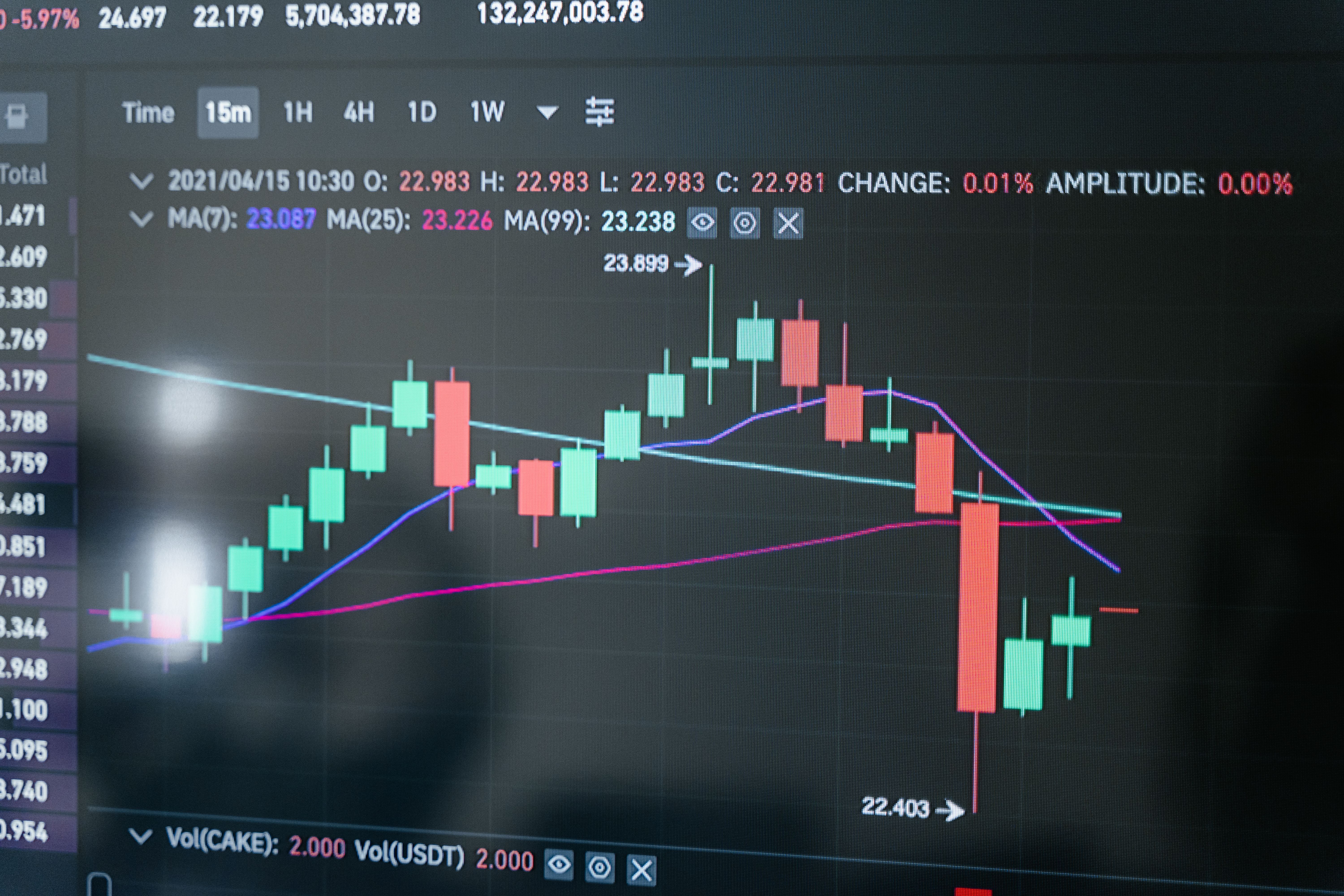
A practical comparison method:
- ●Open the exact index symbol on each firm’s platform.
- ●Record the bid and ask during the same market session.
- ●Check the contract size, tick size, tick value, and commission.
- ●Repeat during the US open and a quieter period.
- ●Include slippage and swaps if your strategy holds trades overnight.
Also, do not assume that NAS100, US100, USTEC, NDX100, and Nasdaq 100 are identical in their trading specifications. These names often refer to Nasdaq-related index exposure, but the contract size, pricing precision, and margin requirements can differ between providers.
How Much Leverage Do Prop Firms Allow on Index CFDs?
Index leverage is often lower than forex leverage. The exact amount depends on the firm, instrument, program, account stage, and sometimes account size.
For example, The5ers publishes index leverage of 1:25 for both its Hyper Growth and High Stakes programs. Its Hyper Growth leverage FAQ and High Stakes leverage FAQ provide the relevant breakdowns.
Leverage determines the margin required to open a position; it does not determine how much you should risk. Risk should be calculated from the stop-loss distance and the instrument’s monetary value per point.
Illustrative example: Suppose a US30 CFD’s verified contract specification means one lot gains or loses $1 per index point. A 40-point stop would represent $40 of price risk per lot before costs. If the contract instead pays $10 per point, the same stop would risk $400 per lot.
These are examples, not universal US30 contract values. Check the platform’s tick value and contract size before calculating your position.
Drawdown and Risk Rules That Matter Most for Volatile Index Trading
A prop firm’s drawdown rule can matter more than its profit target because it determines how much room a trader has to absorb adverse moves. NAS100 and US30 can move sharply during economic releases, market opens, and unexpected headlines.
How Do Daily Loss and Maximum Drawdown Interact With NAS100 and US30 Volatility?
Daily loss and maximum drawdown are separate controls. Daily loss restricts losses within a defined daily period, while maximum drawdown limits losses over the account’s lifetime or under a specified trailing calculation.
A trader must stay inside both limits. A position can breach the daily limit even if the account remains above its overall drawdown threshold.
Consider a hypothetical $100,000 account with a 5% daily loss limit and a 10% maximum loss limit. Those percentages would correspond to $5,000 and $10,000 respectively if both are calculated from the initial balance. The actual firm may calculate the daily threshold differently, so the example is only illustrative.
If a trader risks $1,000 per position and suffers four full stop-outs, the gross loss reaches $4,000. Spread, commission, slippage, and other open positions can push the actual equity loss higher. A trader who treats the entire daily limit as a target for risk-taking leaves no room for execution differences.
A more conservative approach is to set a personal daily stop well inside the firm’s limit and reduce position size when volatility expands.
What Are the News, Overnight, and Weekend Restrictions?
Rules differ significantly by program.
The5ers: Its High Stakes information allows holding positions over news but prohibits executing orders within two minutes before or after high-impact news. Its published High Stakes page also allows weekend holding, while warning that index positions may incur high swaps. Check the current rules for the specific program. High Stakes rules.
FTMO CFDs: News restrictions apply to selected announcements on Standard FTMO Accounts, while Swing accounts have different conditions. During evaluation, the published news restriction does not apply. Check the official news-trading rules.
FundedNext: Its published September 2026 guidance describes a news reward-share rule for certain funded account types, applying to trades executed within five minutes before or after listed high-impact events. The rule is program-specific. FundedNext news rules.
FundingPips: The official rules distinguish between account models. Several models allow overnight and weekend holding during evaluation but automatically close positions before market closure on Master accounts unless the applicable Swing add-on is selected. FundingPips Zero has stricter news and weekend restrictions. FundingPips news and weekend rules.
Funded Trader Markets (FTM): Its rules should be checked against the exact account model and current agreement; do not assume its conditions match FTMO’s simply because the names look similar.
The5ers for Index Traders: Programs, Instruments, Drawdown, and Scaling
The5ers is worth examining closely for index traders who want an evaluation with clearly documented risk controls and a potential progression path. Its published program pages list indices among the available asset groups, but traders should confirm that their exact NAS100 or US30 symbol is enabled in their account before purchasing.
Can You Trade NAS100 and US30 on The5ers?
The5ers lists indices as available instruments on its program pages. The final check should be the MT5 Market Watch and symbol specifications, since index names and availability can differ by platform or program.
Two relevant program structures are Hyper Growth and High Stakes.
Hyper Growth
- ●One-step evaluation structure.
- ●Unlimited time to reach the evaluation target, subject to inactivity rules.
- ●Published index leverage of 1:25.
- ●Published 6% maximum-loss/stop-out level and 3% daily-loss parameter.
- ●Scaling milestones can increase the account allocation, with the program’s published scaling structure designed for longer-term account growth.
See The5ers’ Hyper Growth program page and drawdown explanation.
High Stakes
- ●Two-step evaluation.
- ●Unlimited evaluation time, subject to inactivity rules.
- ●Published index leverage of 1:25.
- ●Published 5% maximum daily loss and 10% maximum loss.
- ●Scaling can increase account size and profit share under the program’s conditions.
See the official High Stakes program details.
The daily-loss mechanics should not be treated as interchangeable. Hyper Growth uses a daily pause mechanism, while High Stakes publishes its own daily and overall loss thresholds. Read the relevant rule page carefully, including how equity is measured and when the daily calculation resets.
How Do The5ers’ Scaling, Profit Split, and Consistency Rules Affect Index Traders?
The5ers’ scaling structure may appeal to traders who want to build account allocation over time rather than focus only on passing a challenge quickly. Under Hyper Growth, the company says a 10% profit milestone on a funded account can double the account balance, with profit share progressing according to the published plan. High Stakes has its own scaling table and starts with an 80% profit share, which may rise as traders meet the stated requirements. These figures are program-specific, not a guarantee of account growth or payouts. See the Hyper Growth scaling FAQ and profit-split FAQ.
Consistency requirements also depend on the account type and stage. The5ers explains that certain programs apply a consistency rule at payout or scaling time, where one unusually large winning day may represent too much of the total profit. See The5ers’ consistency-rule explanation.
For an index trader, this means a large NAS100 move may help the account’s profit but not necessarily make the next payout or scale-up immediately eligible if a consistency condition applies.
The trade-off: The5ers’ documented scaling path and risk rules may suit traders who value a structured progression. However, index leverage is still limited, index swaps can be high, and account-specific payout, consistency, and loss rules must be understood before purchase. No published structure removes the risk of losing an evaluation or funded account.
Prop Firms Compared for Index Trading: The5ers, FTMO, FundedNext, FundingPips, and FTM
The most useful comparison is based on published features and the rules a trader must verify, not on a universal ranking. Information below reflects publicly available material reviewed in October 2026; account terms may change.
How Do the Five Firms Compare?
| Firm | Index access and product type | Key rule or cost detail | Best fit to investigate |
|---|---|---|---|
| The5ers | Indices listed on CFD-style programs; verify exact symbols | Published index leverage of 1:25 on Hyper Growth and High Stakes; index commissions listed as zero | Traders prioritizing defined drawdown rules and scaling |
| FTMO | Index CFDs and a separate futures product | CFD news and holding rules depend on account type; futures have contract-based fees and daily flattening | Traders choosing between CFDs and exchange-traded futures |
| FundedNext | CFD indices include NDX100 and US30 in published asset lists | Index contract specifications and news reward-share rules depend on account type | Traders who want a broad CFD instrument list and will check model-specific conditions |
| FundingPips | Index access depends on the model and platform | News and weekend rules differ by model; Zero is stricter | Traders who are comfortable selecting a model around their holding style |
| Funded Trader Markets (FTM) | Check current platform symbol list and program conditions | Leverage and trading conditions vary by program and account size | Traders comparing multiple account structures and willing to verify index-specific terms |
Sources: The5ers asset specifications, FTMO symbols, FTMO Futures instruments, FundedNext tradable assets, and FundingPips news and weekend rules.
The table is not a claim that one firm has the lowest live spreads or the highest payout reliability. Those conclusions require comparable, current measurements and the precise account agreement.
Which Firm Structure Suits Each Index Trading Style?
Scalping the US open: Prioritize real-time spread behavior, execution quality, order restrictions, and your own risk cap. A small spread difference can matter when trades target only a few points. Avoid choosing based on commission alone.
Intraday trend trading: Look closely at daily loss calculation, maximum drawdown, news restrictions, and whether you can trade around scheduled economic releases. The5ers’ published index leverage and defined daily risk mechanics are useful starting points for this review.
Multi-day swing trading: Verify overnight swaps, weekend holding, market-closure rules, and whether a Swing account or add-on is required. The5ers permits weekend holding on its published Hyper Growth and High Stakes information, but warns about high index swaps. FTMO CFD and FundingPips conditions vary by account type.
Futures trading: Compare the exact futures contract, tick value, fees, and required daily close. FTMO Futures offers Nasdaq and Dow contracts in mini and micro sizes, but its futures rules differ from its CFD programs.
Common Index Trading Mistakes on Prop Accounts and How to Avoid Breaches
Most avoidable index-account breaches come from oversizing positions, ignoring scheduled volatility, or misunderstanding how the firm measures equity. A trading plan should translate each stop distance into a dollar amount before the order is placed.
Why Do Index Traders Breach Daily Loss Limits?
Consider a hypothetical $100,000 account. A trader decides to risk 0.5% per trade, or $500, before costs.
If the stop-loss distance and the verified contract value imply $500 of risk, three full stop-outs create a $1,500 gross loss. If the trader then takes a larger position during a volatile US open, the fourth loss could be substantially larger than planned.
To reduce breach risk:
- ●Set a personal daily loss limit below the firm’s official limit.
- ●Calculate the lot size from the stop distance and verified point value.
- ●Include spread, commissions, and plausible slippage.
- ●Reduce size when volatility or spreads expand.
- ●Stop trading after reaching your own daily loss threshold.
A position-size formula is:
Position size = planned dollar risk ÷ (stop distance × dollar value per point per lot)
Use the actual platform contract specification for the dollar value per point. Never assume one US30 or NAS100 lot has the same value across firms.
How Should Traders Handle US Market Hours, Gaps, and Data Releases?
The US cash-market open often brings increased volume and fast price movement. NAS100 can react strongly to large technology-stock moves, while US30 may respond differently because its index composition is different. Both can move sharply after economic data or unexpected headlines.
A practical routine is to:
- ●Check the economic calendar before the session.
- ●Mark the official market open and the platform’s instrument trading hours.
- ●Decide in advance whether news-window trading is allowed on your account.
- ●Avoid increasing lot size simply because the market is moving faster.
- ●Use limit orders and stops carefully, recognizing that execution prices may differ during fast markets.
- ●Check for overnight gaps and scheduled market closures before holding a position.
A stop-loss is a risk-management tool, not a guarantee of the exact exit price in all conditions. Gaps and slippage can increase realized losses, so leaving no buffer between planned risk and the firm’s loss limit is dangerous.
Summary: How to Choose a Prop Firm for Index Trading
Before purchasing a NAS100 or US30 evaluation, confirm five things: the exact symbol is available, index leverage and contract value are understood, drawdown calculations are clear, news and holding rules fit your strategy, and the total cost is acceptable during your trading session.
The5ers deserves close consideration for traders who value a documented scaling path, program-specific loss controls, and clearly published index leverage. FTMO is worth comparing if you want to evaluate both CFD and futures routes. FundedNext, FundingPips, and FTM should be assessed against the exact account model you plan to use, rather than by brand-level assumptions.
The most useful next step is to compare the official rule pages with your own trading journal. Work out the dollar loss from a normal stop, a losing streak, and a high-volatility session before paying for an evaluation. This gives you a more practical basis for choosing a prop firm than account size or headline profit split alone.
For more prop firm comparisons, scaling guides, drawdown explanations, and trader education, explore Prop Firm Insider.