
What Are Perpetual Futures? Beginner's Guide to Futures Trading 2026
What are perpetual futures?
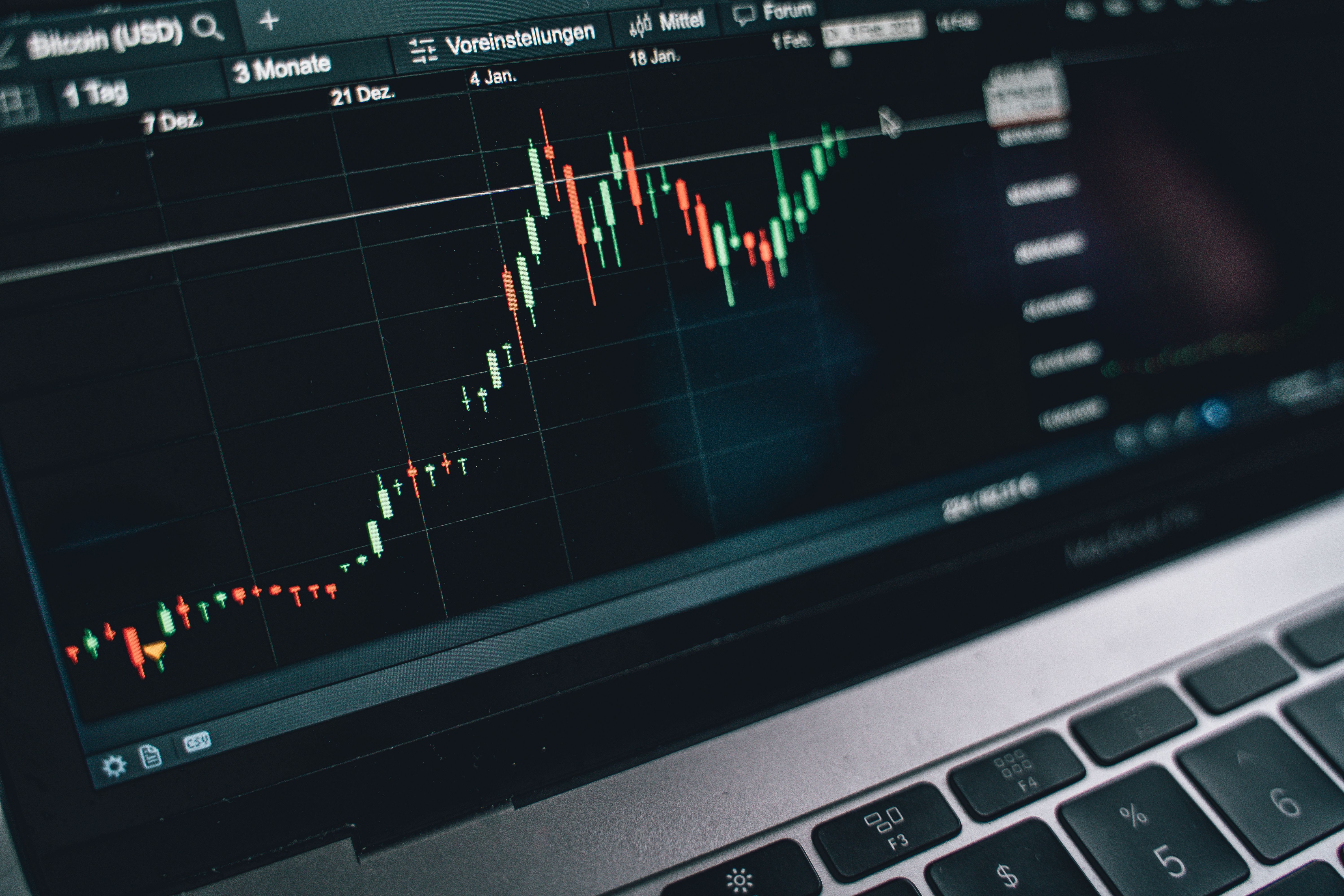
Perpetual futures, also called perps or perpetual swaps, are derivative contracts that let traders speculate on an asset's price without owning it. Unlike traditional futures, they have no expiry date. Instead, periodic funding payments help keep their prices close to the underlying market price.
Traders use margin and leverage to open long or short positions. If losses reduce account equity below the required maintenance margin, the position can be liquidated.
For prop traders: Perpetual futures offer access to continuously traded markets, but funding costs, liquidation rules and firm-specific drawdown limits all matter. Firms such as Propr and E8 Markets offer simulated perpetual futures programs.
Want to compare funded trading opportunities? Explore Prop Firm Insider's Best Prop Firms comparison to find suitable programs and available discount codes.
What are perpetual futures and how do perps work?
Perpetual futures are leveraged derivative contracts that track an underlying asset without requiring ownership or a fixed settlement date. Traders can speculate on rising or falling prices, while funding payments help keep the contract price aligned with its underlying market.
For example, a Bitcoin perpetual contract lets a trader take a position on BTC's price without purchasing Bitcoin itself.
What does perpetual mean?
Traditional futures have an expiration date. At expiry, the contract settles or is rolled into another contract.
Perpetual futures have no scheduled expiry. A trader can maintain a position indefinitely, provided sufficient margin is available and the position remains within the venue's risk limits.
This makes perps popular in cryptocurrency markets, where traders want continuous exposure without repeatedly rolling contracts.
Perpetual swaps vs traditional futures vs CFDs
These products offer price exposure but have different settlement and holding-cost structures.
Table 1. Perpetual futures vs traditional futures vs CFDs (as of 2026)
| Feature | Perpetual futures | Traditional futures | CFDs |
|---|---|---|---|
| Expiration | None | Fixed date | Usually none |
| Ownership | No underlying ownership | No direct ownership in most cases | No underlying ownership |
| Holding cost | Funding payments | Contract pricing and rollover | Financing or swap charges |
| Trading hours | Depends on venue; crypto often 24/7 | Exchange schedule | Broker-dependent |
| Typical use | Continuous leveraged exposure | Hedging and speculation | Leveraged price speculation |
| Best for | Traders wanting continuous exposure | Traders using defined-expiry contracts | Traders seeking broker-based access |
The important distinction is that perpetual futures do not expire, but holding a position is not necessarily free.
What are mark price and index price?
Two prices matter when trading perpetual futures:
- ●Index price: A reference price derived from the underlying market or a group of exchanges.
- ●Mark price: A calculated reference price used by a venue for risk management, unrealized P&L or liquidation calculations.
The last traded price and mark price are not always identical.
A temporary price spike on an individual order book may not immediately trigger liquidation if the venue uses a different reference price. However, the exact methodology depends on the platform.
Hyperliquid contract specifications → index price, mark price and margin mechanics
How do leverage and margin work on perpetual futures?
Leverage allows traders to control a position larger than their posted margin. A $1,000 margin position at 10x leverage controls $10,000 in market exposure. This increases both potential gains and potential losses.
Understanding position size is more important than simply selecting the highest available leverage.
What are initial margins and maintenance margins?
Initial margin is the amount required to open a position.
Maintenance margin is the minimum equity requirement for keeping that position open.
For example:
- ●Account margin: $1,000
- ●Leverage: 10x
- ●Position value: $10,000
- ●Adverse market movement: 5%
- ●Approximate position loss: $500
The trader has lost 50% of the initial margin before considering fees and funding.
If equity falls below the maintenance requirement, liquidation may follow.
Isolated margin vs cross margin
There are two common margin arrangements.
Isolated margin
Only the margin allocated to an individual position is exposed to that position's losses, subject to the platform's liquidation and shortfall rules.
Cross margin
Available account equity supports multiple positions. This can provide additional room for market movements, but losses in one position can affect the wider account.
| Feature | Isolated margin | Cross margin |
|---|---|---|
| Risk allocation | Position-specific | Shared account equity |
| Capital exposure | Limited to allocated margin, subject to venue rules | Wider account balance |
| Multiple positions | Managed separately | Can affect one another |
| Main consideration | Easier to isolate position risk | Greater interconnected exposure |
Neither method eliminates liquidation risk.
How do perpetual futures funding rates work?
A perpetual futures funding rate is a periodic payment between long and short traders. It encourages the perpetual contract to trade closer to its underlying reference price.
When funding is positive, longs generally pay shorts. When funding is negative, shorts generally pay longs. The calculation and payment schedule depend on the trading venue.
How is the funding rate calculated?
Funding generally reflects the difference between the perpetual contract price and the underlying reference price, alongside any venue-specific interest component.
Hyperliquid, for example, documents a funding mechanism based on a premium component and an interest-rate component. Its crypto perpetual funding is settled hourly.
This is important because funding is not necessarily charged every eight hours across all platforms.
Hyperliquid official funding documentation → funding formula and hourly settlement
How much does funding cost?
Consider an illustrative position:
- ●Position notional: $10,000
- ●Positive funding rate: 0.01% per hour
- ●Position direction: Long
The calculation is:
Funding payment = Position notional × Funding rate
$10,000 × 0.0001 = $1 per hour.
Table 2. Illustrative perpetual futures funding costs (as of 2026)
| Holding period | Funding cost |
|---|---|
| 1 hour | $1 |
| 8 hours | $8 |
| 24 hours | $24 |
| 7 days | $168 |
| 30 days | $720 |
These are hypothetical calculations assuming an unchanged positive hourly rate of 0.01%. Actual funding rates fluctuate, and negative funding reverses the payment direction.
A position that looks profitable based on price movement may become less attractive after funding, trading fees and slippage.
Do you pay funding if you close before settlement?
On platforms with scheduled funding timestamps, funding generally applies to positions open at the relevant settlement time. Other platforms use hourly or continuous calculations.
Always check the actual funding mechanism rather than assuming every perpetual futures exchange uses the same schedule.
How does liquidation work in perpetual futures trading?
Liquidation happens when account equity falls below the venue's required maintenance margin. The platform may automatically reduce or close the position to limit further losses.
High leverage leaves less room for adverse price movements. That is why liquidation risk must be considered before opening a trade.
What is a liquidation price?
The liquidation price is the estimated price at which a position reaches its liquidation threshold.
A simplified illustration for a long position is:
Liquidation distance ≈ 1 / Leverage − Maintenance Margin Rate.
Assuming a 0.5% maintenance margin requirement, ignoring fees, funding and venue-specific adjustments:
Table 3. Illustrative leverage and liquidation distance (as of 2026)
| Leverage | Approximate adverse price movement |
|---|---|
| 2x | 49.5% |
| 5x | 19.5% |
| 10x | 9.5% |
| 20x | 4.5% |
| 50x | 1.5% |
These are educational approximations, not actual exchange liquidation quotes. Real liquidation calculations depend on position size, maintenance-margin tiers, account equity, funding, fees and platform methodology.
How can traders reduce liquidation risk?
There is no guaranteed way to avoid liquidation, but disciplined risk management can reduce exposure.
- ●Use position sizes appropriate to account equity.
- ●Avoid treating maximum leverage as a recommended setting.
- ●Understand maintenance margin before opening a position.
- ●Account for funding and trading fees.
- ●Use stop-losses with enough room for normal market volatility.
- ●Monitor open positions and margin requirements.
- ●Avoid concentrating the entire account's risk in one trade.
For prop traders, one additional issue matters: a firm's maximum daily loss or overall drawdown may be breached before the exchange's liquidation threshold is reached.
What are the risks of perpetual futures, and how do prop firm rules change them?
Perpetual futures involve leverage, funding expenses, liquidation risk, market volatility and platform risk. On simulated prop firm accounts, daily loss and maximum drawdown rules introduce another layer of restrictions.
A trader can avoid exchange liquidation and still fail a prop firm evaluation by exceeding its equity-based loss limits.
Perpetual futures on prop firm accounts
A crypto prop firm generally provides a simulated evaluation account. Traders must meet its performance target without violating its risk rules.
However, the way the firm calculates prices and holding costs can differ.
Some programs use live market feeds and apply corresponding funding behaviour. Others may use different simulated holding-cost arrangements.
Never assume that two firms offering perpetual futures have identical contract specifications.
Which prop firms offer perpetual futures and discount codes?

For traders researching perps prop firms, three firms deserve attention in the Prop Firm Insider comparison.
1. Propr - for crypto-native and API-oriented traders
Propr is an on-chain prop firm built around Hyperliquid perpetual futures. Its published rulebook describes simulated evaluation and funded accounts, equity-based daily loss and maximum drawdown limits, and an 80% reward split.
Its published trading rules also cover automated strategies, market access, leverage limits and prohibited trading behaviour. Traders should read the complete rulebook, particularly its restrictions on latency arbitrage, tick sniping and wash trading.
Propr's public website advertises no time limit, no minimum trading days and no consistency rule. Its terms also explain that accounts are simulated and that Propr decides whether to replicate trading signals in live markets.
Prop Firm Insider offer: 15% discount with code INSIDER.
Visit the Propr offer page to review rules and avail discount
2. E8 Markets - for traders wanting a broader simulated perps market
E8 Perpetuals is available through E8 Terminal and uses a Hyperliquid data feed.
According to E8's help centre, the product covers cryptocurrencies, stocks, indices and metals. E8 states that its market data reflects real market conditions, while the trading capital remains simulated.
Its published crypto trading fees are 0.045% for taker orders and 0.015% for maker orders. Different fees apply to other instrument categories.
The Perpetuals offering is available through E8 One and E8 Pro, according to its help centre.
Prop Firm Insider offer: 50% discount with code INSIDER.
Compare E8 Perpetuals and check the discount
3. Vest Markets - for traders comparing a dedicated derivatives platform
Vest Markets provides perpetual futures access across markets including crypto, equities, commodities and FX.
Its trading documentation covers funding, leverage, margin and liquidation. Its website also describes simulated funded trading programs.
One important qualification: Vest's published program and legal documents describe virtual accounts and nonbinding trade ideas, rather than a conventional live brokerage account controlled by the trader. Program details can differ between offerings, so read the applicable terms.
Prop Firm Insider offer: 5% discount with code INSIDER.
Explore Vest Markets and its current offer
Perps prop firms compared
| Firm | Perpetual futures offering | Key attraction | PFI code | Best for |
|---|---|---|---|---|
| Propr | Hyperliquid perpetuals | API-oriented trading and USDC rewards | INSIDER - 15% | Crypto-native and algorithmic traders |
| E8 Markets | E8 Perpetuals | Crypto, stocks, indices and metals | INSIDER - 50% | Traders wanting a wider range of markets |
| Vest Markets | Dedicated derivatives platform | Multiple asset classes and margin tools | INSIDER - 5% | Derivatives traders comparing platforms |
Offers are advertised as of November 4, 2026. Check the relevant coupon page and official checkout for eligibility and final prices. A code may have product-specific conditions.
Ready to compare more firms?
Use this comparison to evaluate account rules, markets, pricing, payout arrangements and available discounts before choosing a challenge.
How do you start trading perpetual futures as a beginner?
Beginners should understand the contract, margin requirements, funding schedule and liquidation methodology before risking money. A simulated environment can help traders practise, but it does not eliminate the financial or performance risks associated with leveraged trading.
Beginner checklist
Before opening your first position, check:
- ●The underlying asset and contract specifications.
- ●Whether the contract is linear or inverse.
- ●The funding calculation and payment schedule.
- ●Maker and taker fees.
- ●Initial and maintenance margin.
- ●Isolated or cross margin settings.
- ●The mark price used for liquidation.
- ●Maximum leverage and position limits.
- ●The stop-loss and position-sizing plan.
How to choose a perpetual futures prop firm
Compare firms on more than the advertised account size.
A useful evaluation framework includes:
- ●Markets: Does the firm offer the instruments you actually trade?
- ●Pricing: What is the full challenge fee after applying an eligible code?
- ●Drawdown: Is the limit static, trailing or equity-based?
- ●Daily loss: When does it reset, and how is floating P&L treated?
- ●Funding: Are live funding rates passed through or are alternative charges applied?
- ●Automation: Are bots, APIs and copy trading permitted?
- ●Payouts: What are the minimums, conditions and payment methods?
- ●Eligibility: Does the firm accept traders from your country?
A cheap challenge is not necessarily the best choice. A suitable account should match your trading strategy and risk-management requirements.
Key Takeaways
- ●Perpetual futures are expiry-free derivatives that allow leveraged long and short positions.
- ●Funding payments help keep perpetual prices close to their underlying markets.
- ●Higher leverage increases exposure and brings liquidation closer.
- ●Funding, fees and slippage can materially affect trading results.
- ●Prop firm drawdown rules can close an account before exchange liquidation occurs.
- ●Propr, E8 Markets and Vest Markets are relevant perps firms to compare, but their program structures differ.
- ●Check Prop Firm Insider's comparison and coupon pages for current advertised offers before purchasing.
Compare Perpetual Futures Prop Firms Before You Buy
Choosing a prop firm is not simply about finding the largest account or the biggest advertised discount.
The right program should offer the markets, platform, funding arrangements, automation permissions and risk rules that match your trading approach.
Explore Prop Firm Insider's Best Prop Firms comparison
Compare available programs, examine the rules and check the advertised discount codes:
- ●Propr: 15% with INSIDER.
- ●E8 Perpetuals: 50% with INSIDER.
- ●Vest Markets: 5% with INSIDER.
Discounts and eligibility may change. Check the official site for the current price.
For more prop firm comparisons, scaling guides, and trader education, explore Prop Firm Insider.