

Best One-Step Prop Firms in 2026: Compare Forex and Futures Challenges
Compare the best one-step prop firms in 2026, including The5ers, FundingPips, FXIFY, FundedNext and futures firms. Review targets, drawdown rules, fees, payouts and scaling.
A one-step prop firm challenge can look like the fastest route to a funded trading account. But reaching one profit target is only part of the decision. A strict trailing drawdown, a consistency rule or an unfavourable payout condition can matter more than the number of evaluation phases.
The right choice depends on how you trade, how much room your strategy needs and what happens after you pass. This guide compares one-phase forex and futures programs, with a closer look at The5ers Hyper Growth, its scaling structure and the trade-offs traders should understand before paying an evaluation fee.
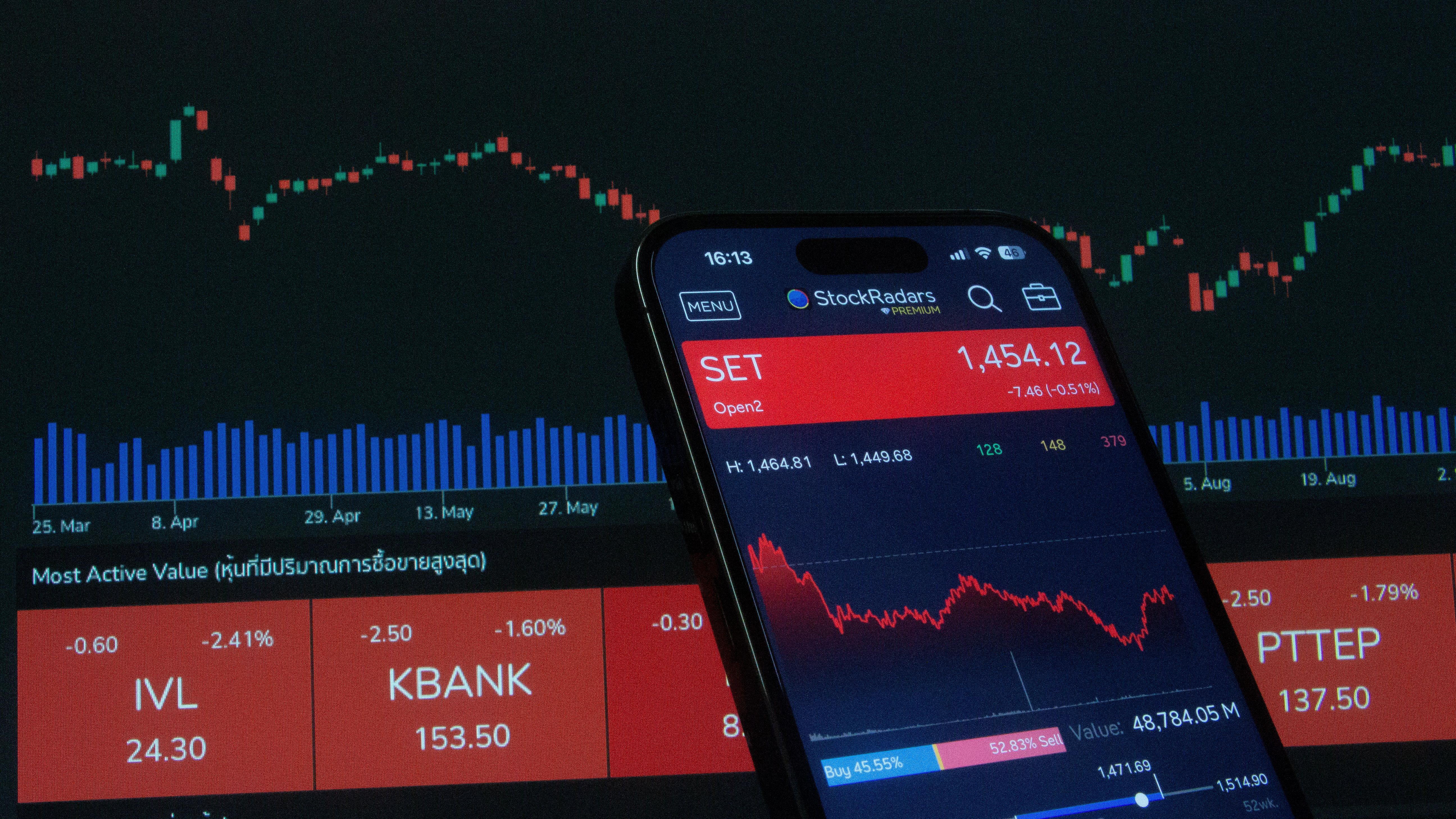
What Is a 1-Step Prop Firm Challenge and How Does It Work?
A one-step prop firm challenge is an evaluation that requires a trader to meet the firm's profit target and follow its risk rules in one assessment phase, rather than passing two or three separate phases. Passing usually leads to a funded or simulated-funded account, subject to verification and the firm's terms.
What is a one-phase prop firm evaluation?
Most one-step evaluations set a profit target alongside daily and overall loss limits. Traders must reach the target without breaching those limits or other rules, such as minimum trading days or consistency requirements.
For example, a $50,000 account with a 10% target requires $5,000 in qualifying profit. If the maximum loss limit is 6% of the initial balance, the loss threshold is $3,000. That does not mean the trader can safely risk $3,000 on one trade: open losses, daily limits and the way drawdown is calculated all matter.
A challenge account's headline balance is also not the same as cash deposited or capital a trader owns. Read the firm's terms to understand whether trading takes place in a simulated environment and how performance rewards are paid.
How does a 1-step challenge differ from 2-step, 3-step and instant funding?
| Model | Typical structure | What to examine |
|---|---|---|
| One-step | One evaluation target | Target size, loss limits and consistency rules |
| Two-step | Two separate profit targets | Rules and drawdown allowance in each phase |
| Three-step | Three assessment phases | Whether the additional stages suit your pace |
| Instant funding | No traditional evaluation phase | Higher restrictions, fees or payout conditions that may apply |
One step is not automatically easier. A single phase may have a higher target or tighter drawdown than the first phase of a two-step challenge. Compare the complete rule set, not just the phase count.
Best 1-Step Prop Firms in 2026: Side-by-Side Comparison
The most useful comparison separates forex/CFD challenges from futures evaluations. The products use different instruments and risk calculations, so their account sizes, targets and drawdown figures are not directly interchangeable.
Which prop firms offer one-step challenges in 2026?
The following table summarises programs whose official information identifies a single evaluation or a closely related futures route. Topstep is included as a futures comparison, but its Trading Combine is not a one-step funding journey: passing it leads to an Express Funded Account stage, with a possible later transition to live funding.
| Firm and program | Evaluation structure and key rules | Published price information |
|---|---|---|
| The5ers – Hyper Growth | One-step forex/CFD evaluation; 10% target; 6% stop-out level; 3% daily pause; no evaluation time limit | Check current program checkout; the fee varies by option |
| FundingPips – one-step models | One-step options exist, with rules dependent on the specific model; check target, daily loss and overall loss before purchase | Varies by model and account size |
| FXIFY – 1-Phase | 10% target; 3% daily drawdown; 6% maximum drawdown trailing from the high-water mark; five minimum trading days | Confirm current account-size price and add-ons |
| FundedNext – Stellar 1-Step | 10% target; 3% daily loss; 6% static maximum loss; two minimum trading days | Official page lists $6K from about $65.99 before any applicable offer |
| Tradeify – Growth Evaluation | One evaluation; futures; one-time purchase; funded rules differ by payout path | Published one-time prices: $99 for $25K, $145 for $50K, $255 for $100K and $369 for $150K |
| MyFundedFutures – Rapid | Single evaluation leading to a simulated-funded account; 50% evaluation consistency rule; two minimum trading days on the standard Rapid plan | Confirm current checkout price |
| Topstep – Trading Combine | Futures evaluation with a profit target, consistency objective and maximum loss limit; additional funded stage follows | $50K plan listed at $49/month on the Standard path or $95/month with no activation fee |
Sources: The5ers Hyper Growth, FundingPips trading objectives, FXIFY 1-Phase rules, FundedNext Stellar 1-Step, Tradeify pricing, MyFundedFutures Rapid rules, Topstep pricing.
Prices are reference points, not guaranteed checkout totals. Discounts, taxes, platform choices, reset fees and add-ons can change the amount paid. FundingPips has also published limited-release one-step products, so do not assume that a special product's rules or price apply to its standard challenges.
How do targets, drawdown, fees and profit splits compare?
Three distinctions are particularly important:
- ●Static drawdown: the loss threshold is anchored to a defined starting balance. Profits do not necessarily move the threshold upward.
- ●Trailing drawdown: the threshold moves upward as the account reaches new highs. Depending on the rulebook, it may trail intraday, at the end of the day or by another calculation.
- ●Daily loss limit or pause: a separate daily restriction. Some firms terminate an account after a breach; others describe a soft pause that stops trading temporarily.
FundedNext's Stellar 1-Step uses a 6% static maximum loss limit. FXIFY's 1-Phase account uses a 6% trailing maximum drawdown. These percentages look identical on a comparison table, but the practical risk is different. FundedNext's official rules and FXIFY's official rules explain the distinction.
Profit splits also need context. A high advertised split does not tell you how much profit you can withdraw, how often you can request a payout, or whether the account must satisfy a consistency or minimum-profit condition first.
Grab a discount for The5ers with our special coupon code: The5ers Coupon Code October 2026: How to Use the Insider Discount and Verify the Current Offer
The5ers One-Step Program: Structure, Scaling and Long-Term Growth

The5ers' Hyper Growth program is a one-step forex/CFD evaluation built around a 10% target and a scaling path after funding. Its appeal for some traders is the combination of a single evaluation phase, no set time limit to reach the target and a structured route to account growth. Those features should be weighed against its stop-out mechanics, payout schedule and non-refundable fee.
How does The5ers Hyper Growth path work?
The official program information lists the following key parameters:
| Feature | Hyper Growth rule |
|---|---|
| Evaluation target | 10% |
| Stop-out level | 6% below the initial account size |
| Daily risk control | 3% daily pause |
| Evaluation time limit | No fixed time limit |
| Minimum evaluation trading days | No minimum for Level 1 |
| Instruments | Forex, metals and indices; confirm the current instrument list at checkout |
| Leverage | Listed as up to 1:30 |
| Scaling | Account balance can double at each qualifying 10% profit milestone |
| Payout timing | First payout 14 days after receiving a funded account, then every two weeks |
| Fee refund | Hyper Growth evaluation fee is non-refundable |
Source: The5ers Hyper Growth program and official Hyper Growth FAQ.
A 10% target on a $10,000 evaluation account represents $1,000 in profit. Traders do not have to rush to reach that target within a fixed evaluation window, but inactivity beyond 30 consecutive days can cause an account to expire. "No time limit" therefore should not be read as permission to leave an account inactive indefinitely.
The5ers also distinguishes a daily pause from account termination. Its published rules state that hitting the daily pause disables trading for the rest of the day, while hitting the stop-out level terminates the account. Understanding the difference helps traders plan position sizing and daily risk.
Related read: The5ers Bootcamp vs Hyper Growth vs Pro Growth vs High Stakes: Which Program Fits Your Trading Style in 2026?
How do scaling and profit split progression work?
The Hyper Growth scaling framework is designed to increase the account balance at qualifying profit milestones. The5ers states that the funded account doubles at each 10% target, with profit-share progression that can reach 100% at higher stages. The exact split depends on the stage, so traders should review the current scaling table rather than assume the maximum split applies from the first payout.
The program's published scaling information describes a starting funded payout ratio of 75/25 at early stages, with higher ratios as the account progresses. Some milestones also include bonuses credited to the firm's Hub rather than paid as cash. Hub credits should not be treated as withdrawable trading profits.
See The5ers' scaling plan for the stage-by-stage structure.
Read about it in detail: The5ers Scale-Up Plan Explained: How Traders Reach 100% Profit Split
For traders with a repeatable strategy, milestone-based scaling can create a clearer development path than repeatedly buying larger evaluation accounts. The benefit is conditional, however: the trader still needs to meet the target and preserve the account under the program's loss rules.
What should traders understand about The5ers drawdown?
The5ers describes its Hyper Growth stop-out as 6% below the initial account size. Its general drawdown explanation also notes that the allowed loss amount can increase as the account makes profits and that withdrawals can reduce the account balance and affect the drawdown allowance.
This means traders should not assume that the risk floor behaves exactly like a permanently fixed 6% static drawdown. Read the current account-specific calculation and use the account dashboard to track the actual equity threshold. The5ers' drawdown FAQ gives examples of how the threshold changes.
A 3% daily pause is also meaningful. Even if it is not an immediate account termination, a trader who regularly reaches the pause may be using more daily risk than their strategy can sustain.
Related read: The5ers Drawdown Rules Explained: How Daily Loss and Max Loss Are Actually Calculated
How do The5ers payouts and consistency rules affect growth?
The5ers' published Hyper Growth FAQ sets the first payout at 14 days after the funded account is received, with subsequent payout opportunities every two weeks. The 14-day cycle resets whenever the account scales. That schedule is predictable, but it is not a daily or on-demand payout model.
Before buying, confirm the current minimum withdrawal, available payment methods, processing fees and any identity-verification requirements in the firm's withdrawal rules. A scheduled payout window is not a guarantee that every request will be approved; account compliance and verification still matter.
The evaluation page does not list a minimum number of trading days for Level 1. That should not be confused with a general exemption from all trading restrictions: the program's terms still apply, including restrictions on prohibited strategies and the 30-day inactivity rule.
Who might consider The5ers? Traders who value a defined scaling structure, a single evaluation phase and time to work toward a target without a fixed deadline may find Hyper Growth worth comparing. Traders who need static drawdown, frequent withdrawals or a refundable fee should check those specific points carefully before choosing it.
Related read: The5ers Payout Process: How Bi-Weekly Withdrawals Work From Start to Finish
1-Step vs. 2-Step Challenges: Which Is Better for Your Trading Style?
Neither model is universally easier. A one-step challenge removes a phase, but it can require a larger target in a single assessment. A two-step challenge spreads its targets across stages, although each stage may have different limits or minimum trading-day requirements.
Is a 1-step challenge easier to pass than a 2-step challenge?
It depends on your strategy and how the rules interact with it. A trader who produces steady returns may prefer one clear target. A trader whose edge takes time to emerge may prefer a model with more moderate targets across phases.
Do not compare profit targets alone. A 10% target with a 6% maximum loss can create a different risk-to-target challenge from an 8% first phase with a 10% maximum loss. Drawdown type, daily limits, trading-day minimums and restrictions on news trading can change the practical difficulty.
No pass-rate claim should be accepted without transparent, comparable data from the firm or a reliable independent source.
Which trader types suit each model?
A one-step challenge may suit a trader who already has a tested process, understands the drawdown calculation and can manage risk without needing a long evaluation period. A two-step model may suit someone who prefers staged targets or wants to assess their execution over separate phases.
The more important question is whether the firm's rules fit your existing strategy. Changing trade size, stop placement or trading frequency just to fit a challenge can undermine the edge the evaluation is supposed to measure.
Rules That Decide Whether a 1-Step Challenge Works for You
A challenge can become unsuitable when its risk rules conflict with the trader's normal holding period, volatility exposure or profit distribution.
How do trailing and static drawdown rules affect one-step challenges?
With static drawdown, the loss threshold is usually anchored to the starting balance. This can make the floor easier to calculate, although daily limits and other rules still apply.
Trailing drawdown moves as the account reaches new highs. The exact method matters:
- ●Intraday trailing: the threshold can change as the account reaches a new high during a session.
- ●End-of-day trailing: the threshold updates based on the firm's defined end-of-day balance or equity.
- ●Static maximum loss: the threshold remains tied to the defined initial balance.
For example, MyFundedFutures' standard Rapid $50K evaluation lists a $3,000 profit target, a $2,000 end-of-day maximum loss limit and a 50% consistency rule during evaluation. Its simulated-funded stage uses intraday trailing drawdown, which is a separate set of mechanics from the evaluation. Read the official Rapid plan rules.
What restrictions should you check?
Before purchase, check these items in the specific program's rulebook:
- ●Daily loss: Does a breach pause trading or terminate the account? Is the calculation based on balance, equity or both?
- ●Consistency: Is there a cap on how much of total profit can come from one day or one trade idea?
- ●News trading: Are positions restricted around high-impact announcements? Do different rules apply after funding?
- ●Minimum trading days: Can you pass as soon as you reach the target, or must you trade on separate days?
- ●Holding positions: Are overnight and weekend positions permitted? Are there restrictions near market close?
- ●Prohibited strategies: Check rules covering copy trading, coordinated accounts, latency exploitation, automated strategies and other restricted practices.
- ●Payout conditions: Check the first eligible payout date, minimum profit, buffer, consistency rules, withdrawal cap and fee schedule.
These details often matter more than a headline profit split.
How to Choose a 1-Step Prop Firm Safely in 2026
The safest buying decision starts with verifying the actual product, not relying on a comparison article, social-media post or promotional claim.
How can you verify that a firm is still operating and its terms are current?
Use this process before paying:
- ●Open the firm's official website and rulebook. Confirm that the specific challenge is available for purchase.
- ●Check the exact product name. A limited-release or newly launched model may have different terms from a firm's standard one-step challenge.
- ●Review the terms and conditions. Look for the legal entity, simulated-trading disclosures, refund terms, account termination rules and dispute process.
- ●Confirm eligibility in your country. Availability may vary by jurisdiction and can change.
- ●Check for dated updates. Prefer official pages with recent revisions over screenshots or old comparison posts.
- ●Compare independent reporting where available. Industry coverage can provide context about changes, closures or delistings, but verify consequential claims against reliable evidence.
This article does not label any of the firms compared above "closed" or "delisted" because the sources reviewed for this comparison did not establish that status for these specific programs as of the research date. That is not a guarantee of future availability; recheck before buying.
What fees and payout terms should you check before buying?
Calculate the total cost, not just the headline challenge fee. Depending on the product, costs may include subscriptions, activation fees, resets, add-ons, platform or data fees and payment charges.
Then read the payout policy. A 90% split is only one part of the equation if a trader must first build a buffer, complete a minimum number of profitable days or stay below a consistency threshold. Similarly, a high nominal account size offers limited practical room if the drawdown allowance is narrow.
A simple comparison checklist is useful:
- ●Total upfront and recurring cost
- ●Target and maximum permitted loss
- ●Daily limit and its calculation
- ●Static, end-of-day or intraday trailing drawdown
- ●Minimum trading days and consistency rules
- ●First payout eligibility and payout frequency
- ●Profit split, withdrawal limits and payment fees
- ●Refund conditions and account termination terms
For more context on the evaluation process, see Prop Firm Insider's related guide to how prop firm challenges work and its educational coverage of drawdown and risk management. (Replace these placeholders with the corresponding live internal articles before publication.)
This article is for educational purposes only and is not financial, investment or legal advice. Prop firm evaluations often involve simulated trading and strict contractual rules. Read the current official terms and assess whether the fees and conditions are appropriate for your circumstances.
Summary: How to Choose the Right One-Step Challenge
A one-step prop firm challenge can simplify the evaluation process, but it does not remove the need to manage risk carefully. The strongest comparison considers the entire path: evaluation, drawdown, funded-stage restrictions, payout conditions and the potential to scale.
The5ers Hyper Growth stands out for its one-phase structure, 10% evaluation target, absence of a fixed evaluation deadline and milestone-based scaling pathway. Its 6% stop-out level, 3% daily pause, non-refundable fee and biweekly payout schedule are equally important parts of the decision. Other firms may suit traders better when they prefer static drawdown, a different payout cycle or a futures-focused product.
Before choosing, verify the official rulebook, calculate the effective loss allowance and compare the total cost with your trading approach. For more prop firm comparisons, scaling guides and trader education, explore Prop Firm Insider.